The New Urban Renaissance: How Small Spaces are Redefining Modern Living
In the heart of Lisbon’s Marvilla district, a transformation is taking place that serves as a blueprint for the future of urban living. Once a gritty, industrial, and working-class enclave known as Villa do Marum (the Village of the Sea), Marvilla is currently undergoing a deep process of urban regeneration. Old factories are being reborn as creative studios, galleries, and artisan workspaces. But perhaps the most radical shift is happening not in the warehouses, but in the forgotten “attic” spaces of 20th-century heritage buildings.
The Challenge of the Modern Footprint
As city dwellers increasingly prioritize location and lifestyle over square footage, the concept of the “home” is being stripped down to its essentials. A prime example is a recently renovated 60-square-meter (645 sq. ft.) attic apartment nestled within a heritage-protected area of Lisbon.
 Before its metamorphosis, the space was a dark, fragmented series of rooms: a kitchen, two cramped quarters, and a toilet that lacked even a designated bathroom area. Access was difficult, and the sloping roof—tapering from a mere half-meter to three meters at its peak—posed a significant architectural puzzle.
Design as a Lifestyle Enabler
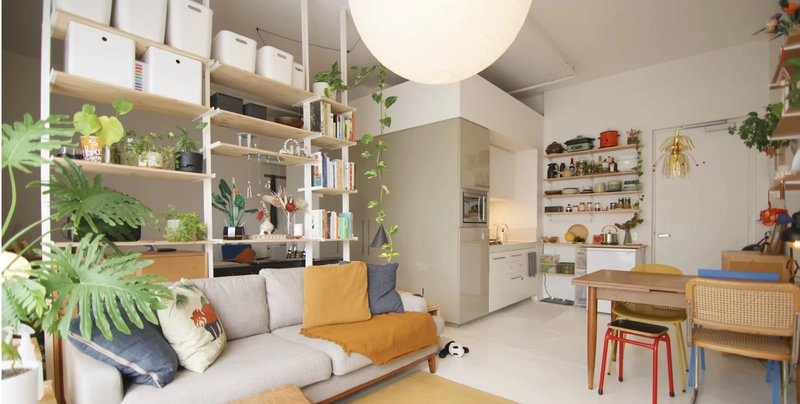
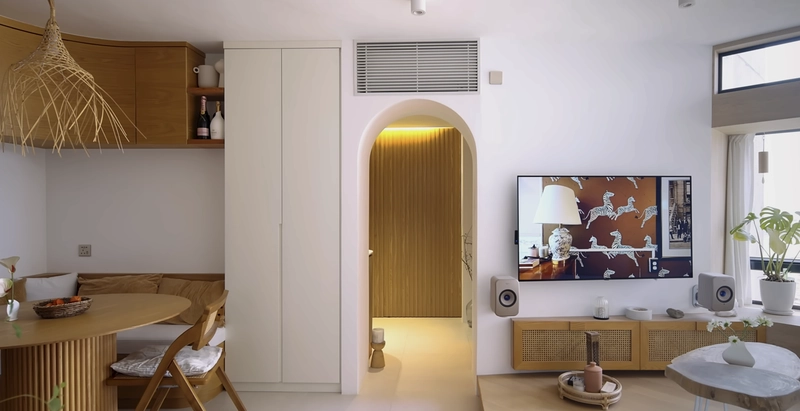
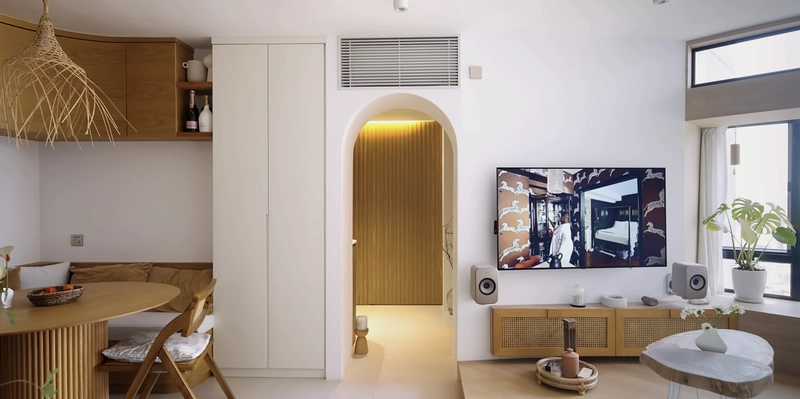
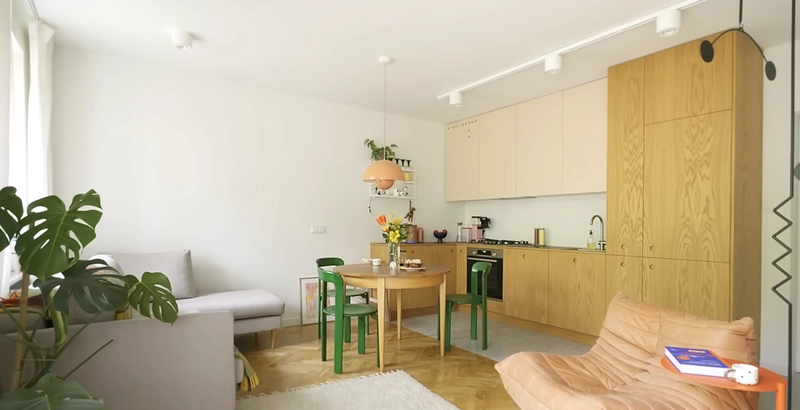
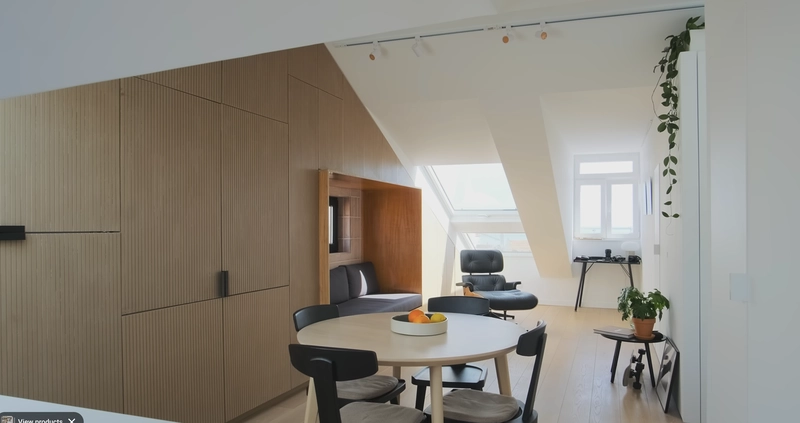
Modern residents are no longer looking for static rooms; they require fluid, multi-functional spaces that adapt to their daily routines. To achieve this, designers are moving away from traditional walls. In the Lisbon project, all internal walls were removed to create an open-plan kitchen, dining, and living area.
Key innovations in this “never too small” philosophy include:
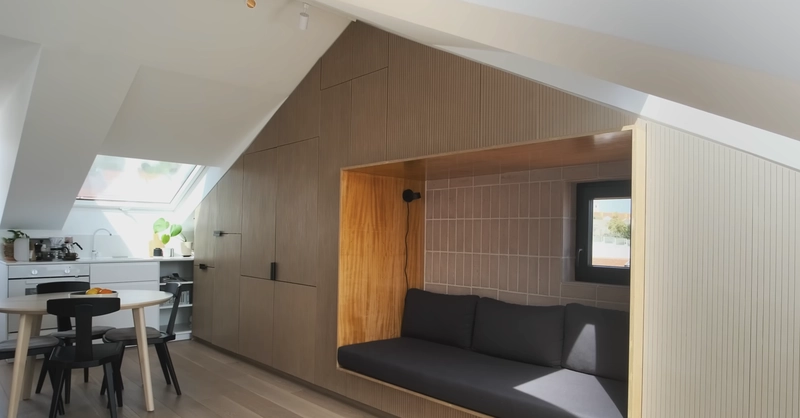
• Integrated Storage: A colored MDF storage wall runs along the gable, containing both household items and part of the kitchen, which effectively frees up floor space and adds insulation.
• Hidden Functionality: The kitchen is partially hidden behind pocket doors that slide into the unit, revealing an induction cooktop and range hood only when needed.
• Multi-use Furniture: The living room features a sofa that is the same width as a single bed, allowing it to double as a guest room.
• The “Home Office” Nook: Even in 60 square meters, a dedicated workspace is carved out under a dormer window, taking advantage of the extra vertical space provided by the roof’s extension.
The Illusion of Abundance: Light and Materials
According to design experts, the secret to making a small space feel expansive lies in the strategic use of natural, borrowed, and reflected light. In the Lisbon attic, four new skylights and two dormer windows were installed to offer transparency. A large mirror placed above the entrance stairs not only conceals the fuse box but reflects light to make the entry feel significantly more spacious.
The aesthetic choices also reflect a modern preference for “light and clean” finishes. Beige fiber cement panels cover the entrance, while the kitchen utilizes white composite stone to blend seamlessly with the white ceilings and walls. Even the bathroom, tucked into a nook, remains bright thanks to a fluted glass window and a custom-made metal and wood vanity that acts as both decor and a light-filtering divider.
A Sustainable Urban Future
The drive toward renovating “unwanted and forgotten properties” is about more than just aesthetics; it is a social and environmental necessity. Experts involved in the Lisbon project suggest that renovation is a vital process that upgrades the performance of outdated buildings, allowing more people to engage with the city’s life without the need for sprawl.
As this Lisbon attic proves, the key to modern living is to optimize space without compromising comfort. By embracing open plans, integrated technology, and a “light-first” design philosophy, the smallest of footprints can provide a high quality of life in the center of the world’s most vibrant urban hubs.