The Essence of Space: Architecture as a Catalyst for Modern Living
As an architect, I often observe that our built environment is not merely a collection of walls and roofs, but a profound influence on the rhythm of our daily lives. In an era where modern living is frequently equated with the accumulation of “things,” we are seeing a transformative shift toward minimalism and intentionality. A poignant example of this can be found in a 45-square-meter home in Heguri, Nara, designed for a family of five. This project serves as a masterclass in how architecture can facilitate a high quality of life through spatial efficiency, a deep connection to nature, and the thoughtful application of materials.
Architecture and the Natural World
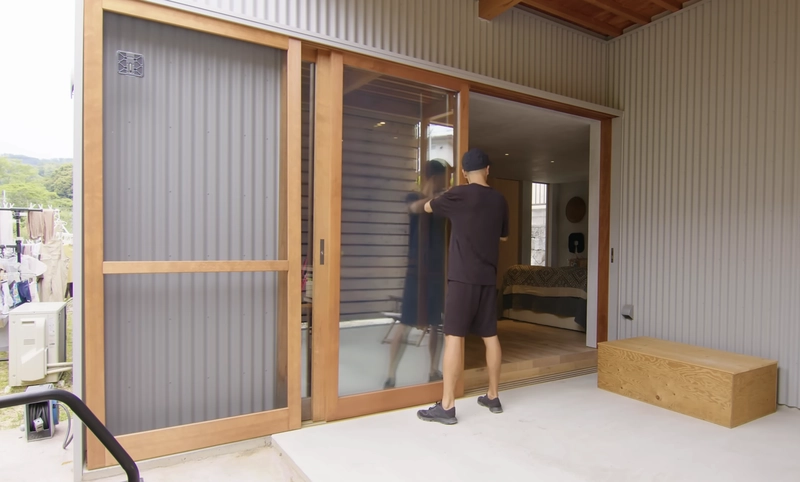
Modern living often feels disconnected from the environment, yet architecture has the power to restore this relationship. In the Nara project, the residence is situated in a tranquil area characterized by mountains, rivers, and rice fields. Rather than isolating the occupants from this landscape, the design employs a “doma” terrace and an outdoor living porch that serves as a transitional zone.
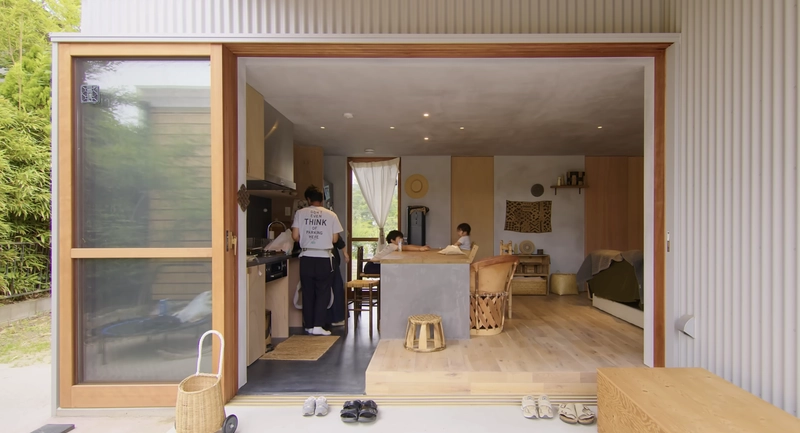
This porch, protected by an overhanging roof, allows the family to enjoy the outdoors regardless of the weather—be it rain or intense sunlight. By using movable wooden fences at the site’s perimeter, the architecture grants the residents the agency to adjust their level of openness or privacy based on their mood and the time of day, effectively blurring the boundary between the private domestic sphere and the natural world.
Rethinking Spatial Efficiency
The challenge of housing a family of five within just 483 square feet (45sqm) necessitates a radical approach to spatial configuration. Architecture influences modern living by proving that “small” does not mean “cramped” if the space is multifunctional. Key strategies include:
• Multipurpose Furniture: The dining table is designed not just for meals, but as a secondary workspace for kitchen preparation.
• Flexible Room Utility: Instead of static bedrooms, the home utilizes traditional futons. By folding the bedding away in the morning, the sleeping quarters are instantly transformed into functional living or play areas.
• Integrated Utility Zones: The home streamlines daily chores by combining the laundry area, closet, and drying zone into a single “utility zone”. This ensures that light and wind can be captured to dry clothes efficiently, which are then stored exactly where they were processed.
These design choices demonstrate that efficiency is achieved by prioritizing human movement and light—often referred to as “抜け感” or a sense of visual openness—through the strategic placement of long, narrow windows.
Materiality and the Human Experience
The materials we choose to surround ourselves with define the sensory experience of a home. In this contemporary Japanese context, the architect utilized a blend of industrial and natural materials to create a durable yet warm atmosphere. The exterior features Galvalume walls for resilience, contrasted with wooden fences that add organic texture.
Internally, the use of Mortex for both the dining table and specific wall sections provides a seamless, tactile aesthetic, while stainless steel kitchen surfaces offer functional longevity. These choices reflect a philosophy of being “surrounded by things one loves” rather than being overwhelmed by unnecessary clutter.
Conclusion: Returning to the Origins of Living
Ultimately, architecture’s greatest influence on modern living is its ability to prompt a re-evaluation of our values. Current housing trends often prioritize excessive storage to accommodate an overflow of material goods. However, as seen in the Heguri home, there is a profound sense of freedom in detaching from material obsession.
By focusing on the “origin of human life”—where people can live simply and authentically—architecture creates a space where a family can flourish in a compact footprint. It teaches us that the core of modern living is not found in the volume of space we own, but in the quality of the light, the flow of the air, and the intentionality of our surroundings.