The Art of the Urban Sanctuary: Transforming Small Heritage Spaces
As an interior design expert, I have witnessed a significant shift in how we approach our living environments. We are moving away from the “bigger is better” mentality and embracing the beauty of urban regeneration and mindful spatial design. Transforming a “forgotten” property—such as a dark heritage attic—into a light-filled sanctuary requires more than just aesthetic updates; it requires a strategic overhaul of how space, light, and functionality interact to influence our mood and comfort.
Redefining the Layout for Flow and Connection
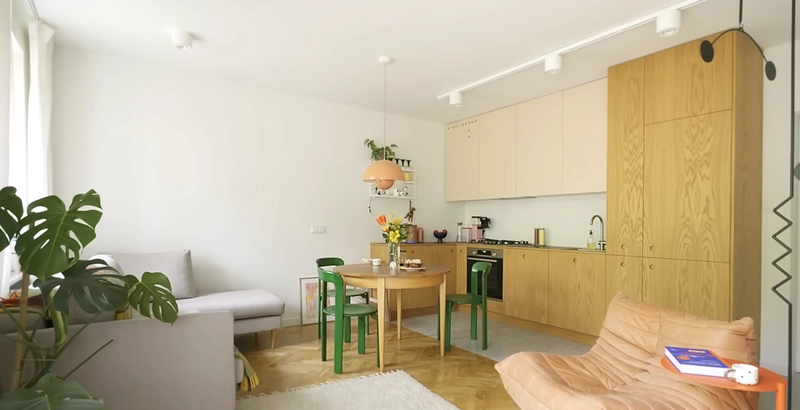
The modern trend in home interiors focuses heavily on open-plan living. By removing restrictive internal walls, we can create a cohesive kitchen, dining, and living area that feels significantly larger than its footprint.
Expert Advice: Do not be afraid to alter the very “bones” of a building. In recent heritage renovations, we have found that repositioning the entrance can entirely change the flow of a home, allowing for a more generous use of space in areas like the bathroom or living zone. Using materials like beige fiber cement panels for entryways can provide a textured, sophisticated transition into the home.
The Psychology of Light: Natural, Borrowed, and Reflected
Light is perhaps the most critical factor in determining the mood of a home. A well-lit space feels open and inviting, whereas a dark room can feel cramped and oppressive.
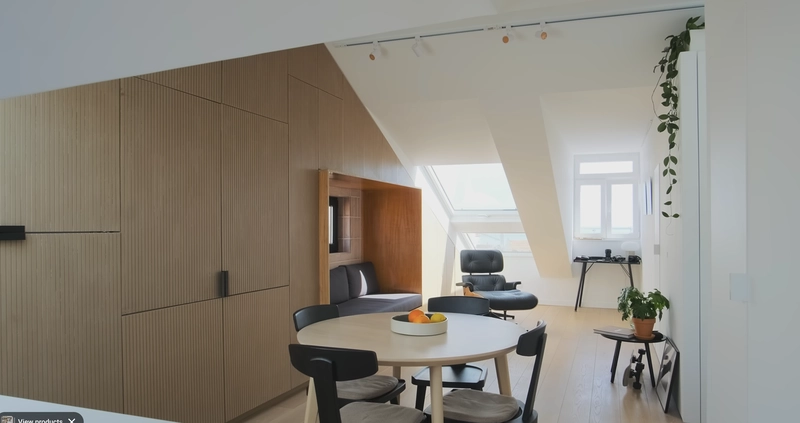
• Natural Light: Incorporating skylights and Dormer windows not only provides essential transparency but also connects occupants to the outside world, offering views of the sky or stars at night.
• Borrowed Light: In areas where direct windows aren’t possible, use “borrowed light” from common spaces via slim windows or fluted glass, which provides privacy while still illuminating dark nooks.
• Reflected Light: To double the perceived size of a room, strategically place large mirrors. A mirror installed above a staircase or on cupboard doors can conceal utility boxes while reflecting light from skylights throughout the apartment.
Integrated Functionality and Hidden Storage
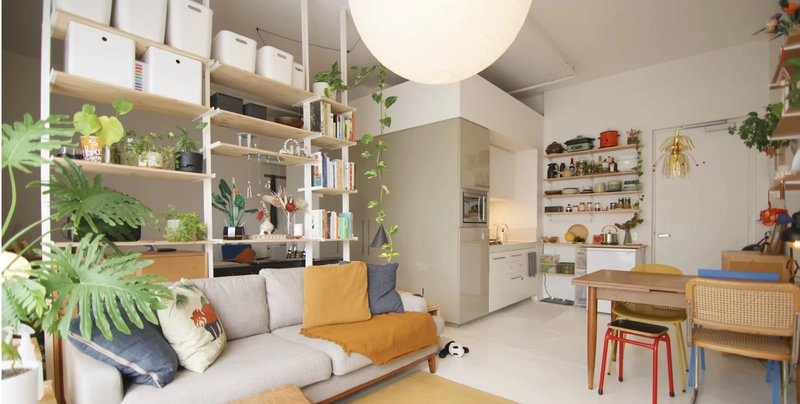
One of the most effective trends for maintaining a clutter-free, calm environment is integrated storage. By utilizing the “dead space” under sloped roofs or within cable walls, designers can free up the main floor area.
Expert Advice: Consider a “storage wall” made from colored MDF with push-to-open panels. This can house entire sections of a home, such as a “hidden” kitchen. Using pocket doors that slide into the unit allows you to reveal the kitchen when needed and hide it away to maintain a minimalist aesthetic during relaxation hours. Additionally, these thick storage walls provide the added benefit of improved insulation, enhancing the physical comfort of the home.
Multi-Functional Design Choices
In a small space, every piece of furniture must earn its keep. Current trends favor custom-made, multi-purpose items that act as both decor and functional tools.
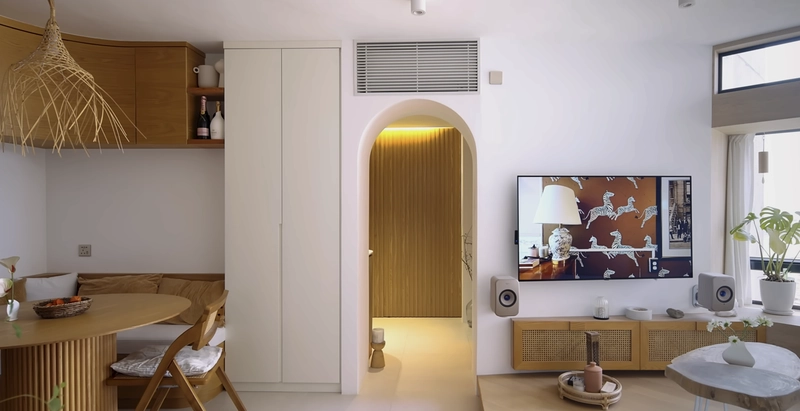
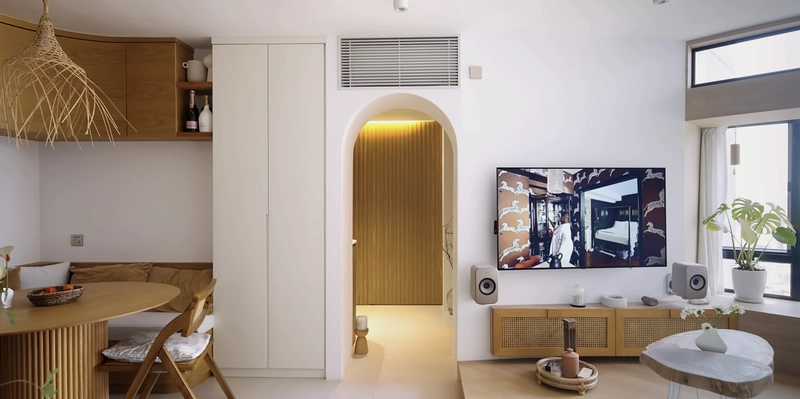
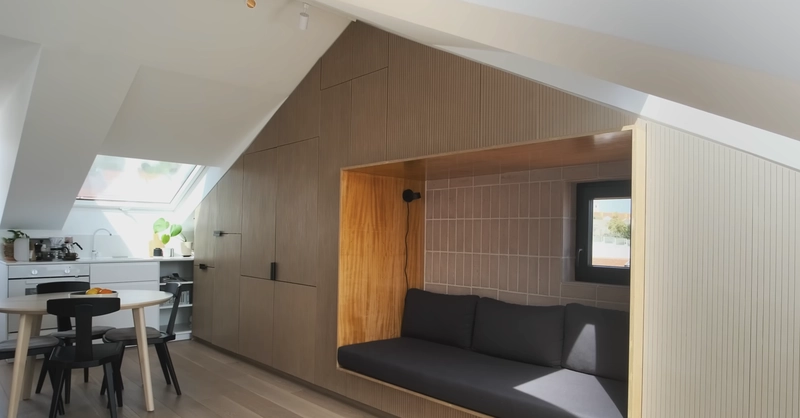
• Niche Seating: Build sofas into wall niches to save space. If designed with the same width as a single bed, these areas can easily transition into guest accommodations.
• Dividers as Decor: A custom-made vanity in a bathroom can serve as a decorative focal point while simultaneously acting as a spatial divider for the shower.
• Unified Color Palettes: To create a sense of infinity and calm, match your furniture to your walls. Using a white countertop and cabinetry that continues the white of the ceiling and walls helps the furniture “disappear,” making the room feel boundless.
Conclusion: Comfort Without Compromise
Ultimately, the goal of modern renovation is to optimize space without compromising comfort. By upgrading the performance of outdated buildings through thoughtful design, we create environments that support our well-being. Whether it is the tactile feel of handmade brick tiles or the airy sensation of a track lighting system in a high-ceilinged room, your design choices should strive to create a space you truly love to spend time in.