The Alchemy of the Small: An Architect’s Perspective on Modern Urban Living
In the evolving landscape of our cities, architecture is no longer just about constructing the new; it is about the thoughtful transformation of the forgotten. As an architect, I view every “unwanted” property—such as the heritage attic spaces found in Lisbon’s historic Marvilla district—as an opportunity to redefine how we live. Modern living demands a synthesis of spatial efficiency, sustainable material choices, and a profound reconnection with the natural world, even within the constraints of a dense urban environment.
The Art of Spatial Efficiency
The modern urban dweller often faces the challenge of limited square footage. However, the true measure of a home is not its size, but its spatial intelligence. In our recent work on a 60-square-meter attic, the primary objective was to “optimize the space without compromising comfort”.
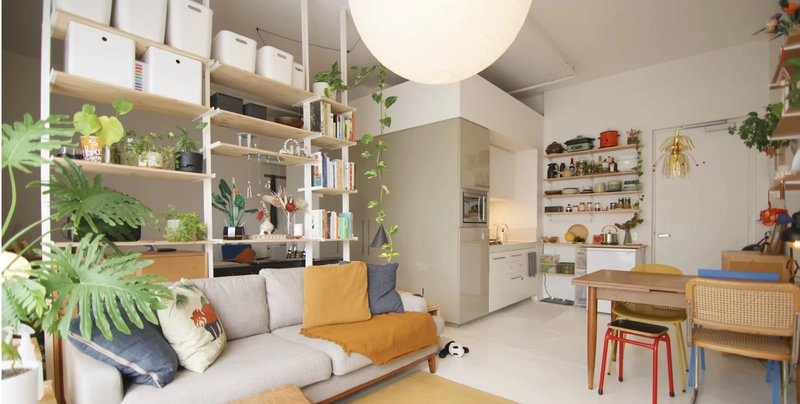
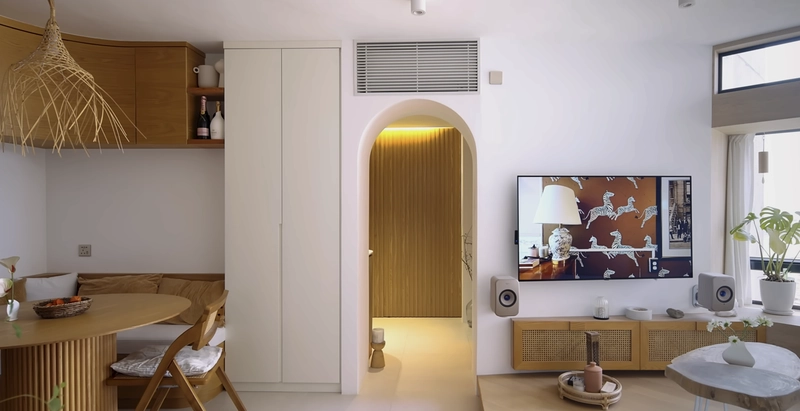
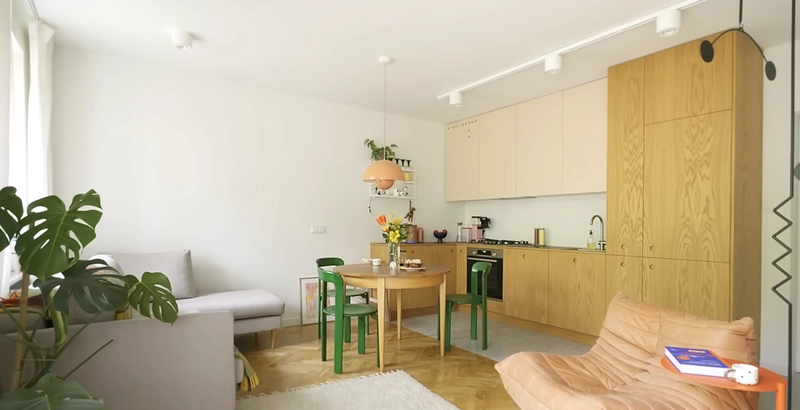
To achieve this, we must be willing to deconstruct traditional layouts. By removing internal walls, we can create an open-plan kitchen, dining, and living area that breathes. Efficiency is further realized through integrated architecture:
• Centralized Access: Altering a staircase to enter in the middle of a home can eliminate wasted hallway space.
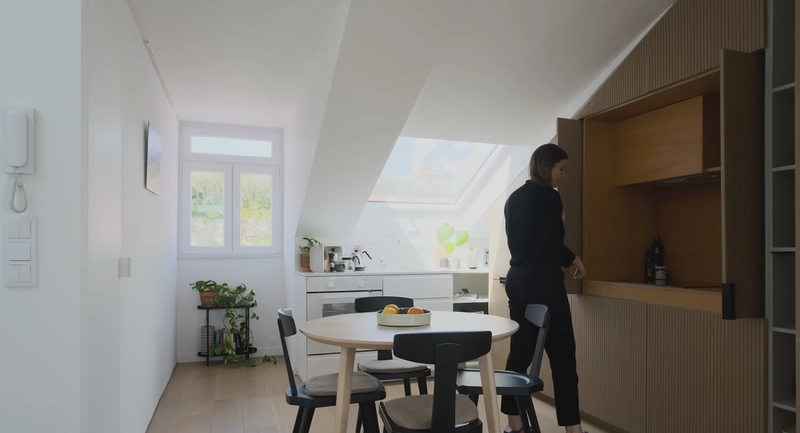
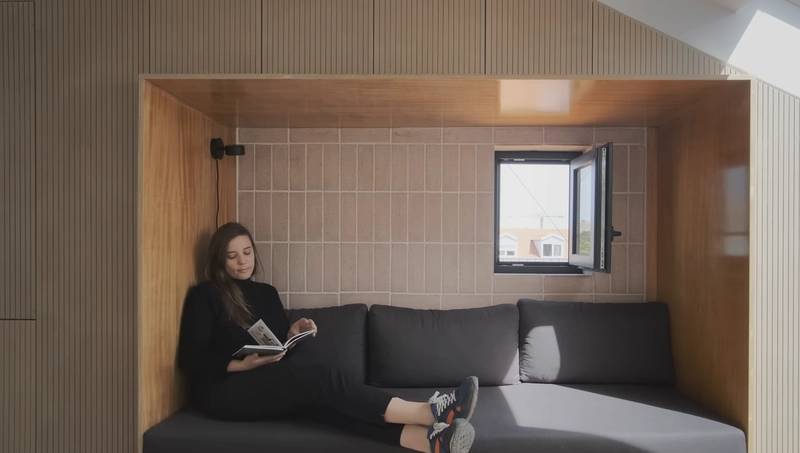
• Multifunctional Niches: Utilizing the “dead space” under sloped roofs for kitchenettes or sofas—which can double as guest beds—maximizes every inch.
• Invisible Storage: Integrated storage walls, such as those made from colored MDF with push-to-open panels, keep the living area clutter-free while serving a dual purpose by providing additional insulation.
Sustainability and the Performance of Materials
Architecture influences modern living by upgrading the performance of outdated buildings, allowing more people to engage with the city’s life. Sustainability in modern architecture often starts with renovation rather than demolition. By breathing new life into 20th-century structures in heritage-protected areas, we preserve cultural history while implementing modern standards.
Our choice of materials reflects a balance between durability and aesthetics. For instance, beige fiber cement panels provide a clean, industrial look for entryways, while handmade brick tiles add a tactile, human element to living spaces. Even the choice of a composite stone for countertops ensures longevity and a seamless visual flow when paired with white walls and ceilings. These choices are not merely decorative; they are strategic decisions that improve the building’s thermal performance and longevity.
Architecture as a Bridge to Nature
Perhaps the most vital role of modern architecture is its ability to foster a relationship with the natural environment, even in an industrial zone. We achieve this by “opening the apartment to the surrounding area,” taking advantage of views such as the Tagus River.
Light is our primary tool for creating a sense of openness. In small spaces, we rely on a combination of:
• Natural Light: Large Dormer windows and skylights provide transparency and a direct connection to the sky.
• Borrowed and Reflected Light: Mirrors placed above entrances or on cupboard doors can reflect light from skylights, making deep corners feel bright and spacious.
• Airflow: Operable skylights and small windows are essential for natural ventilation, ensuring the air remains fresh.
There is a psychological shift that occurs when architecture invites nature inside. A simple skylight placed above a bed allows a resident to “see the stars at night as you lay down,” a luxury that transcends the physical dimensions of the room.
Conclusion
Architecture is the framework through which we experience the modern world. By focusing on spatial optimization, high-performance materials, and the orchestration of light and nature, we can transform even the smallest, most “forgotten” attic into a sanctuary. Through renovation, we do more than just fix a roof; we enhance the functionality of the city itself.