The New Urban Sanctuary: How Design is Reshaping the Modern Micro-Home
In the heart of Kwun Tong, a bustling industrial area turned creative hub in Hong Kong, self-taught interior designer Daphne Ho is proving that the future of urban living isn’t about square footage—it’s about intentionality. Her 48-square-meter (516 sq. ft.) apartment serves as a masterclass in how modern lifestyles are forcing a radical rethink of the traditional “home” layout.
Breaking the “Diamond” Mold
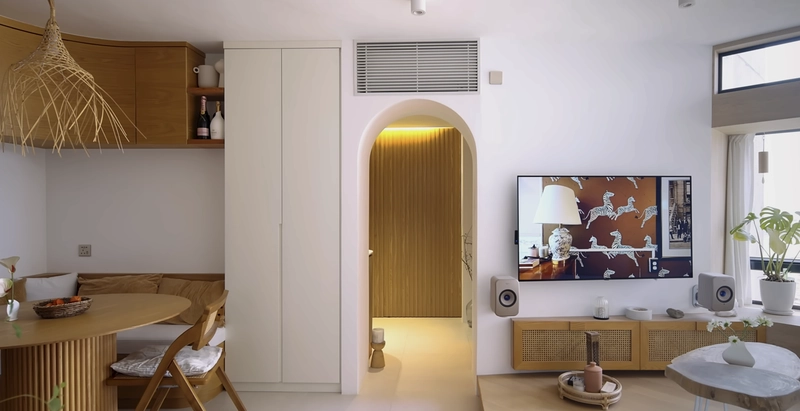
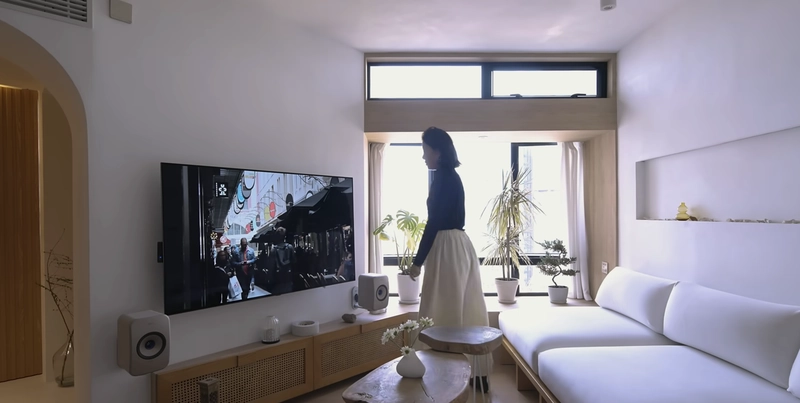
Many modern urbanites face the challenge of irregularly shaped floor plans. Ho’s apartment featured a “diamond-shaped” layout, a common quirk in Hong Kong’s private housing estates that often leaves residents struggling with awkward corners. To combat this, Ho utilized arches and curves to soften the space’s rigid geometry, creating a “tranquil and cozy” environment that prioritizes flow over traditional room divisions.
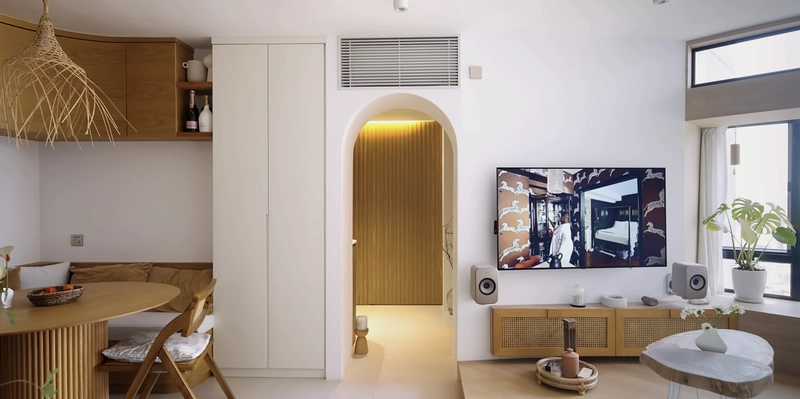
The renovation, completed on a modest $5,000 budget, involved stripping back decades of wear. Ho opted for a neutral palette, using white epoxy paint for the floors to maximize brightness. This “blank canvas” approach allows the home to feel spacious despite its limited footprint.
Zoning Without Walls
As modern lifestyles become more fluid, the need for rigid walls has diminished. Ho demolished the original bedroom walls to expand the bathroom and replaced every door with sliding doors to save critical floor space.
Instead of walls, she uses levels to define “zones.”
• The Entryway: Influenced by Japanese traditions, a small foyer with a platform and shoe cabinet ensures dirt stays out of the living area.
• The Living Room: Set on a wooden platform, this area features a custom-made angled sofa that follows the room’s unique shape and doubles as a guest bed.
• The Dining Space: A step down from the living area creates a visual boundary. Ho insists on a circular dining table, noting that in feng shui, it symbolizes uniting the family.
Furniture That Works Overtime
In a micro-home, every object must serve a dual purpose. Ho’s design philosophy hinges on maximizing storage without cluttering the visual field.
• Hidden Storage: Deep drawers are tucked under the sofa, a full-height pegboard organizes daily necessities behind the front door, and a “narrow vertical drawer” in the kitchen hides brooms and mops.
• Custom Solutions: In the bedroom, a king-size bed is built high to allow for massive storage underneath for seasonal items.
• Flexibility: The second bedroom is currently a “multifunctional room” with non-fixed furniture, allowing it to transform as the couple’s needs evolve.
The Materiality of Wellness
Modern living isn’t just about space; it’s about health and sustainability. Ho utilized non-toxic Japanese lime plaster for the walls and ceilings. In the bathroom, she incorporated Japanese Aomori Hiba wood for the flooring and bathtub ledge, a material prized for its anti-molding and antibacterial properties.
The Designer’s Secret: Patience and Planning
For those looking to replicate this success, Ho emphasizes that patience is a prerequisite. It took her nearly 60 months to curate the perfect secondhand furniture pieces for her home. She credits mood boarding—specifically using tools like Milanote—as the key to maintaining a consistent style and organizing inspiration before a single nail is driven.
“When designing a small space,” Ho explains, “it is important to be open-minded to the possibility of each area and corner, but at the same time to spare blank space as balance”. As our cities grow denser, the lesson from Kwun Tong is clear: a home isn’t defined by its size, but by the clever ways we make it fit our lives.