The Art of Intentional Living: How Modern Design Trends Foster Comfort and Serenity
In the contemporary world of interior design, we are witnessing a profound shift away from the excess of the past. Today’s most compelling trend is not a specific color palette or a furniture style, but a movement toward intentional minimalism and a deeper connection to nature. As an interior design expert, I believe that the spaces we inhabit are more than just shelters; they are the backdrops of our lives, and the choices we make within them directly influence our psychological well-being.
By examining a remarkable 45-square-meter home in Nara, Japan—housing a family of five—we can find a blueprint for how thoughtful design enhances comfort and mood through simplicity and functionality.
1. Embracing Multi-Functionality to Reduce Stress
One of the most effective ways to improve the mood of a home is to eliminate the stress of “clutter culture.” Modern trends are moving away from the obsession with storage for the sake of ownership, focusing instead on “living humanely” by not being obsessed with material possessions.
Design Advice:
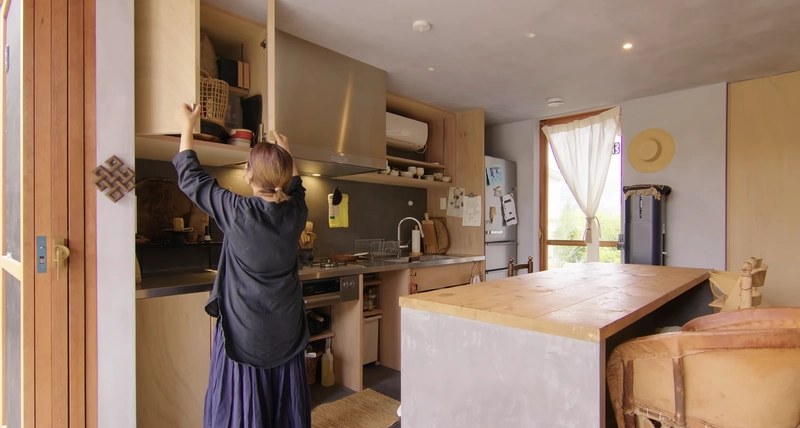
• Flexible Furnishings: To maximize a small footprint without sacrificing comfort, choose furniture that serves multiple purposes. For instance, a large dining table can be designed at a height that allows it to function as both a gathering space for meals and an additional kitchen work surface.
• The Power of the Futon: Consider rooms that can transition throughout the day. Using traditional futons that can be folded and stored away allows a bedroom to serve as a spacious daytime living or play area, preventing the home from feeling cramped.
2. The Synergy of Indoor and Outdoor Living
A major trend in modern architecture is the seamless integration of nature. Natural light and airflow are not just aesthetic choices; they are essential for regulating our circadian rhythms and improving our overall mood. In the Nara home, the use of a doma (dirt floor) terrace creates an “outdoor living” space that is protected by eaves, allowing the family to enjoy the fresh air even during rain or intense sunlight.
Design Advice:
• Strategic Light Placement: Use narrow, elongated windows to provide “nuke-kan” (a sense of openness or escape) and to bring in natural light without sacrificing privacy.
• Dynamic Boundaries: Incorporate adjustable elements, such as multi-panel sliding gates or doors, which allow you to change how much you open or close your home to the outside world based on your daily mood and activity.
3. Materiality and Tactile Comfort
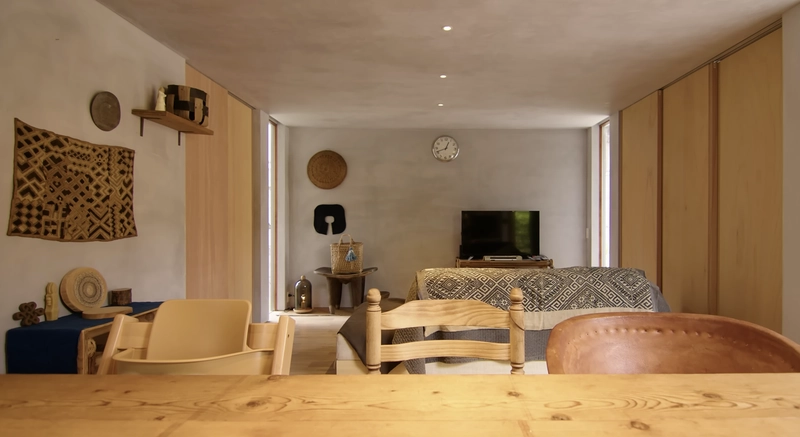
The materials we choose—the “skin” of our home—affect our comfort level. Current trends favor a mix of industrial durability and organic warmth. We see this in the combination of Galvalume walls with natural wood and the use of sophisticated materials like Mortex for tables and walls.
Design Advice:
• Textural Contrast: In utility areas like the kitchen or bathroom, pair sleek stainless steel or tiles with warmer, textured materials to prevent the space from feeling clinical.
• Integrated Storage: To maintain a calm environment, hide visual clutter. Use benches that double as shoe storage boxes and hide shelving behind mirrors in vanities to keep surfaces clear.
4. Designing for Daily Flow
Efficiency in design reduces the daily “friction” of chores, which in turn enhances our comfort. A highly effective trend is the creation of a Utility Zone that combines the laundry, closet, and drying area. In this configuration, clothes can be dried and stored immediately in the same space, saving time and energy.
Final Thoughts: Returning to the Origin
Ultimately, the goal of modern interior design is to return to the “origin of human life,” where we are surrounded only by the things we truly love. By choosing to live in a space that prioritizes natural light, flexible functionality, and a connection to the environment, we create a sanctuary that supports our physical comfort and nourishes our emotional health.
When designing your home, ask yourself: Does this choice allow me to live more simply? Does it bring me closer to nature? If the answer is yes, you are well on your way to creating a space that is not only trendy but truly restorative.