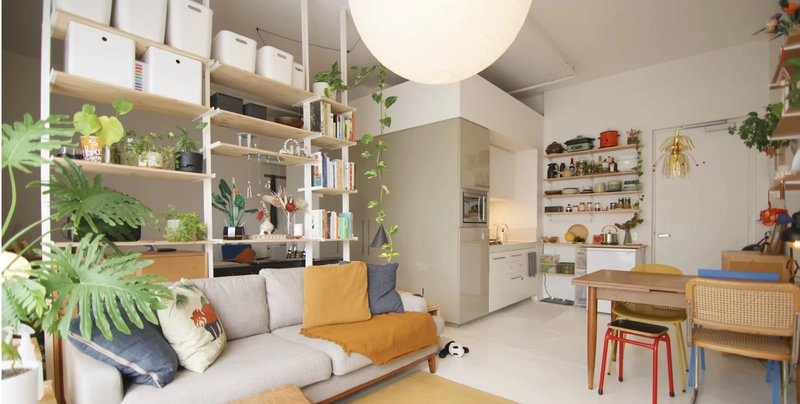
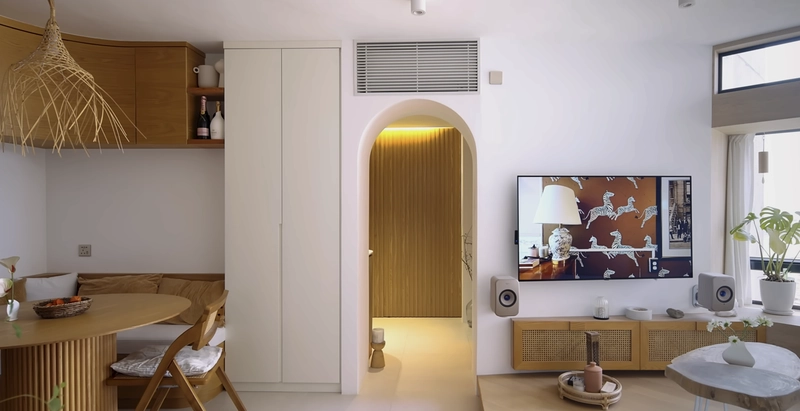
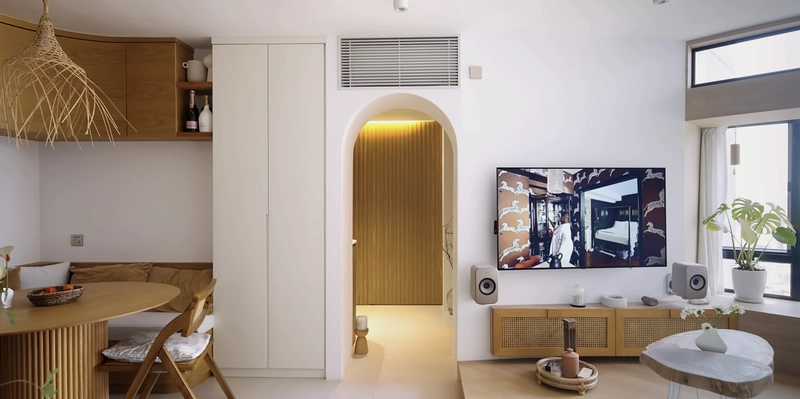
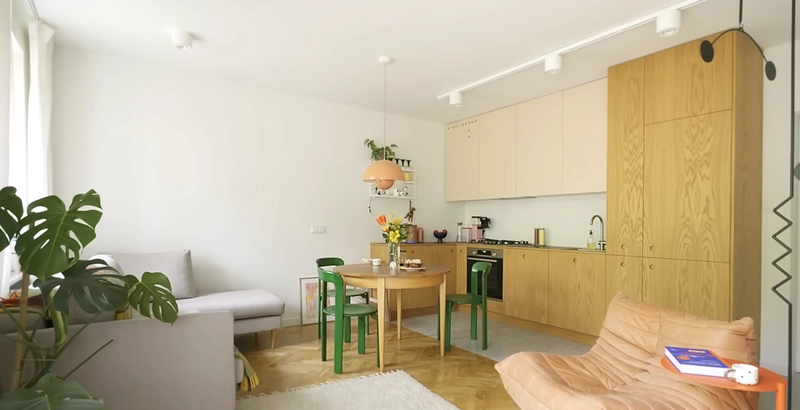
Minimalist Japandi-style Apartment, Bangkok 47sqm/506sqft
As an architect, I view every square meter of a home not just as physical space, but as a canvas for enhancing the human experience. Modern living, particularly in dense urban environments like Bangkok, demands a shift from expansive layouts to thoughtful, intentional design that prioritizes quality over quantity. By analyzing projects like the “Loom behind the park” apartment, we can see how architecture serves as a bridge between sustainable practices, spatial efficiency, and our innate connection to the environment.
The Materiality of Sustainability
In the modern architectural landscape, sustainability is increasingly defined by the repurposing of materials and the use of modest, low-impact resources. One of the most insightful ways architecture influences modern living is through the conscious reuse of existing elements to prevent waste; for instance, incorporating engineered wooden flooring salvaged from another property into a new design.
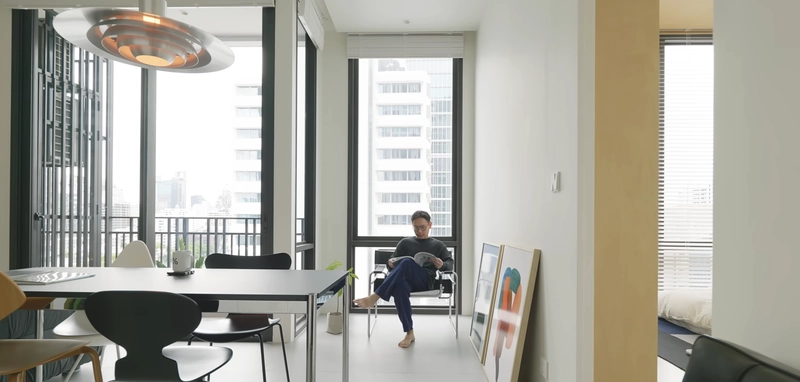
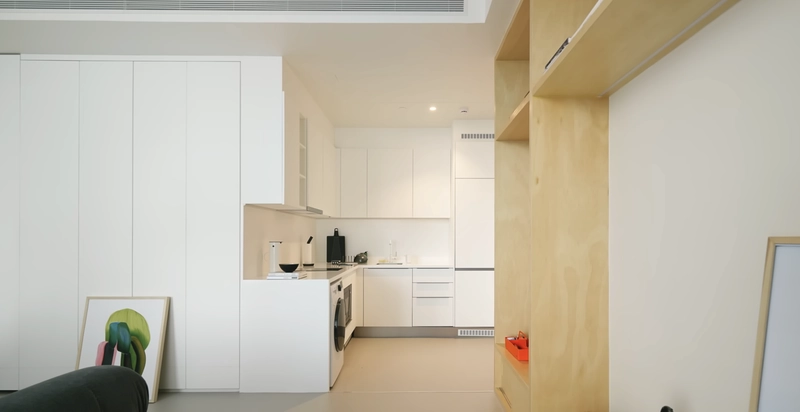
Furthermore, the choice of materials like blockboard (a light plywood) serves a dual purpose: it is a modest material that provides a comforting, “cozy cap-like” feel while remaining functional for built-in structures. By using a neutral color scheme and matte finishes, architects can create a “seamless space” that acts as a backdrop for the inhabitant’s personal expression, such as art or designer furniture, rather than the architecture itself competing for attention.
Engineering Spatial Efficiency
The core challenge of modern architecture is to maximize usage within minimized space. We achieve this through several key strategies:
• Multifunctional Transitions: Architecture can guide movement by making furniture serve multiple roles. A shoe bench cabinet at an entrance can extend to become a media console, effectively transitioning the space from the entryway to the living room.
• Hidden Functionality: Spatial efficiency is often about what is not seen. Floor-to-ceiling cabinets can hide entire home offices, providing a privacy screen during work hours that can be tucked away to reclaim the living area.
• Vertical Layering: In compact rooms, we often elevate specific areas, such as creating a wooden bed platform. This not only emphasizes the sleeping zone but allows for integrated storage underneath or alongside the structure for items like suitcases.
These efficiency measures do more than just save space; they reduce the time and energy required for maintenance, allowing residents to focus on the activities they truly enjoy.
Architecture as a Conduit to Nature
The relationship between architecture and nature is vital for well-being in the modern world. Architecture influences living by framing and pulling in the natural environment. Large windows that fill a floor with natural light can make a compact 47-square-meter apartment feel expansive and connected to the outside world.
When a direct view of nature is available—such as being situated behind a major park—the interior design should remain neutral and modest to let that external connection be the focus. Even in “dead zones” without natural light, such as internal bathrooms, architects use tone, texture, and depth (such as playing with tile sizes and dark moods) to create an atmospheric experience that compensates for the lack of a window.
Ultimately, modern architecture teaches us that living well does not require a large footprint. By focusing on spatial efficiency, sustainable material choices, and a harmony with light and nature, we create environments that are both comfortable and profoundly functional.