The Art of Intentional Living: How Modern Design Transforms Small Spaces into Sanctuaries
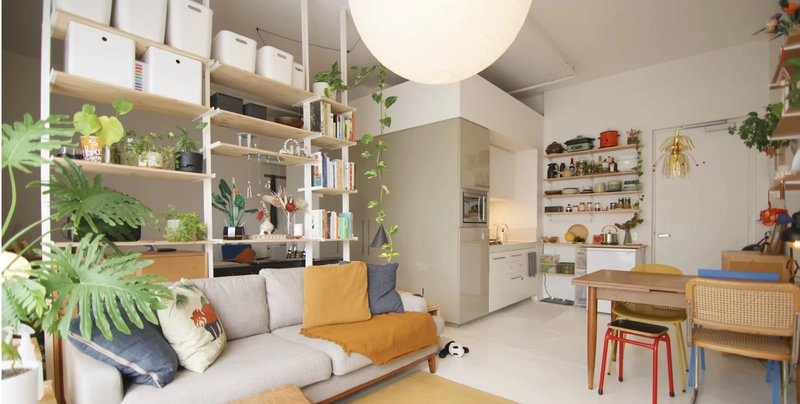
In the world of contemporary interior design, we are witnessing a profound shift from purely aesthetic choices to a philosophy of intentional living. As an expert in the field, I often observe that the most successful homes are those that prioritize maximizing usage within a minimized space. Current trends, such as the rise of the “Japandi” aesthetic, focus on creating neutral, complementary spaces that allow a resident’s unique furniture and artwork to become the true focal points. By selecting the right materials and color schemes, we can transform even a compact apartment into a peaceful retreat that enhances both comfort and mood.
The Foundation of Comfort: Materiality and Neutral Tones
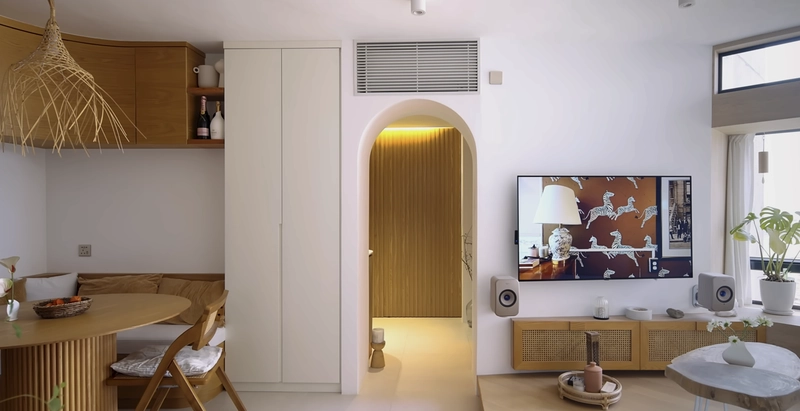
One of the most effective ways to foster a “comforting feeling” in a home is through the strategic use of modest, light-toned materials. Current trends favor the use of blockboard, a type of light plywood, which can be used for built-in features like shoe fins or wall paneling to provide warmth and texture.
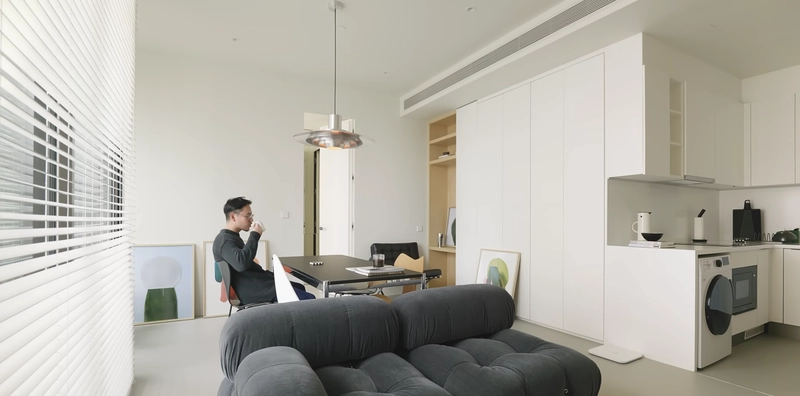
To create a clean and seamless space, I recommend removing busy wallpapers in favor of painting walls white. This creates a gallery-like backdrop that highlights designer pieces, such as a dark gray modular sofa, while making the area feel significantly larger. To further enhance this feeling of spaciousness, consider a uniform flooring scheme—such as light gray rubber sheets or repurposed engineering wooden floors—that flows through the entire apartment.
Designing for Mood: Light and Transitions
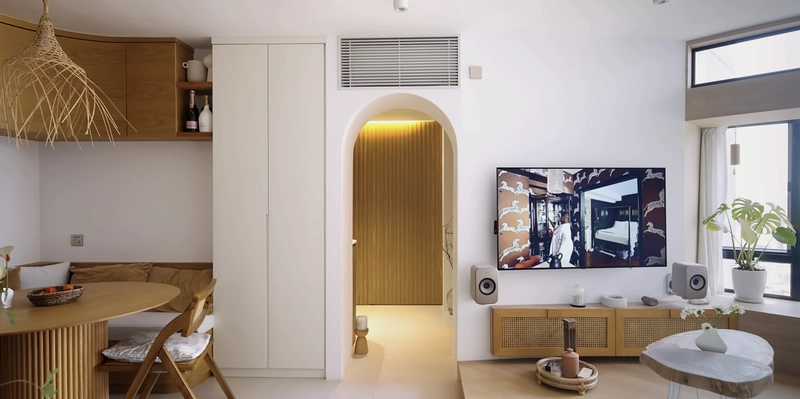
The way a space is arranged directly impacts our daily emotional state. A key trend in modern design is the transition of space; for example, extending an entrance shoe cabinet to become a TV console helps guide the eye and the body smoothly into the living area.
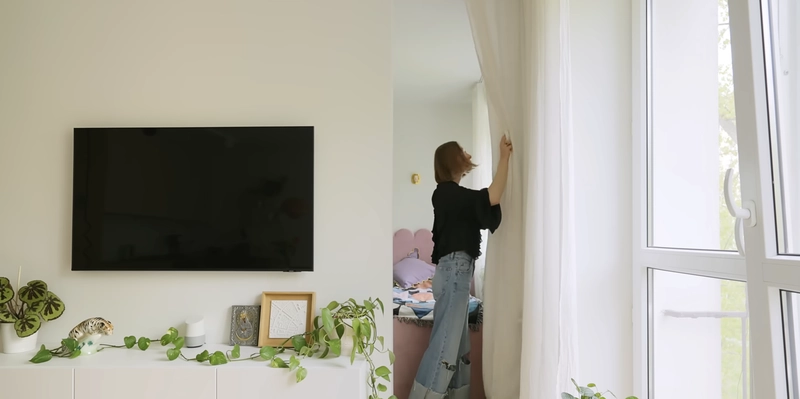
Natural light remains the most vital element for a positive mood. In compact living, ensure that large windows are unobstructed to allow light to fill the floor. For dining areas, use pendant lamps to “define the space” without the need for physical walls, creating a designated zone for nourishment and connection.
Innovative Solutions for Multifunctional Living
As our homes increasingly become our offices, design must adapt to provide multifunctional utility without clutter. Specific advice for the modern homeowner includes:
• The Hidden Office: Integrate “hidden” office spaces within floor-to-ceiling cabinetry. Using an open door as a privacy screen allows you to focus during the day and “tuck away” your work at night to maintain a work-life balance.
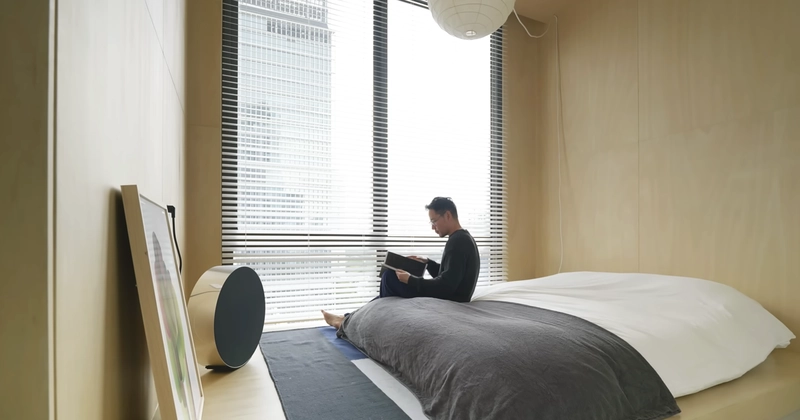
• The Bed Platform: In compact bedrooms, elevating the sleeping area onto a wooden platform creates a distinct zone for rest. Utilizing blockboard for the walls and ceiling in this area can create a “cozy cave-like space” that emphasizes the intimacy of the room.
• Integrated Storage: Maximize every inch by installing built-in floor-to-ceiling cabinets and hidden compartments for bulky items like suitcases.
Creating Depth in Unexpected Places
While light and airy is the standard for living areas, current trends suggest playing with darker tones to create depth in smaller, windowless rooms like bathrooms. Using black tones and varying tile sizes can transform a tiny bathroom into a sophisticated space with a unique “mood and tone,” turning a functional room into a private escape.
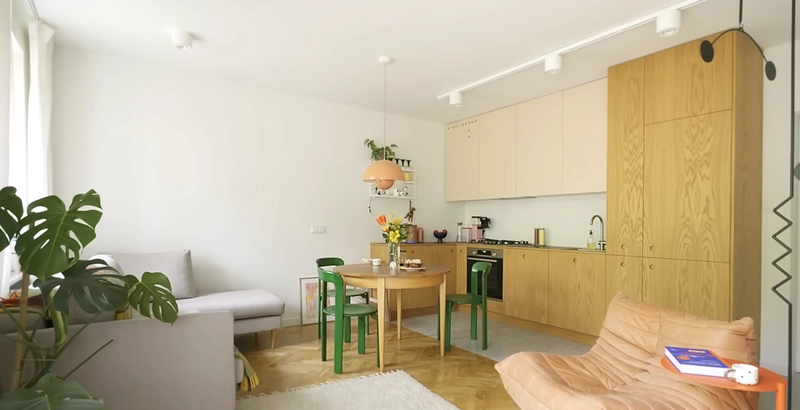
In conclusion, modern interior design is not about how much space you have, but how you use it to serve your well-being. By focusing on simple, matte finishes—such as white laminate for kitchens—and prioritizing energy-efficient, easy-to-maintain layouts, you can spend less time on chores and more time on the things you truly enjoy. Whether you are a renter or a homeowner, adopting a minimalist yet intentional approach will help you transform your living room into a space you truly love.